
How We Style Our Coffee Tables
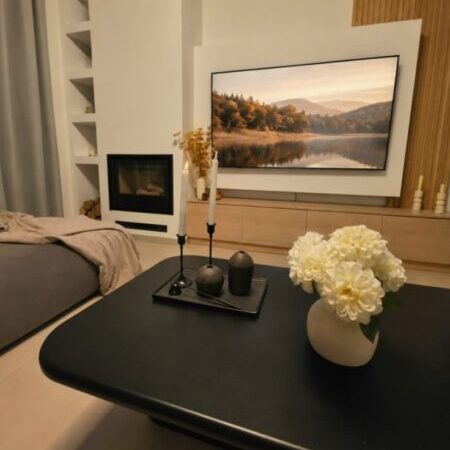
Coffee tables are probably one of the things in our homes that we restyle most often.
Sometimes it’s because we’ve brought home fresh flowers, sometimes we move a few things around just to see them differently — and sometimes an arrangement we liked the day before suddenly feels like it needs a little change.
It’s surprising how much such a small area can change the feel of an entire living room. A floral arrangement can soften the space, while darker details can give it definition. But when too many pieces start competing for attention, that calm feeling can quickly disappear.
Let the Table Lead the Way
Before thinking about styling, it helps to look at the table itself. A larger rectangular table can carry more visual weight, while a smaller round table often needs very little. Round tables naturally encourage a more central arrangement, while a longer surface gives more freedom with placement.
If the table has an interesting shape, texture or finish, there is no reason to hide too much of it. Letting part of the surface show can be part of the styling too. Sometimes we’ll try one more piece, move something around, and then realise the simpler version was actually the better one.
Start With One Piece You Really Like
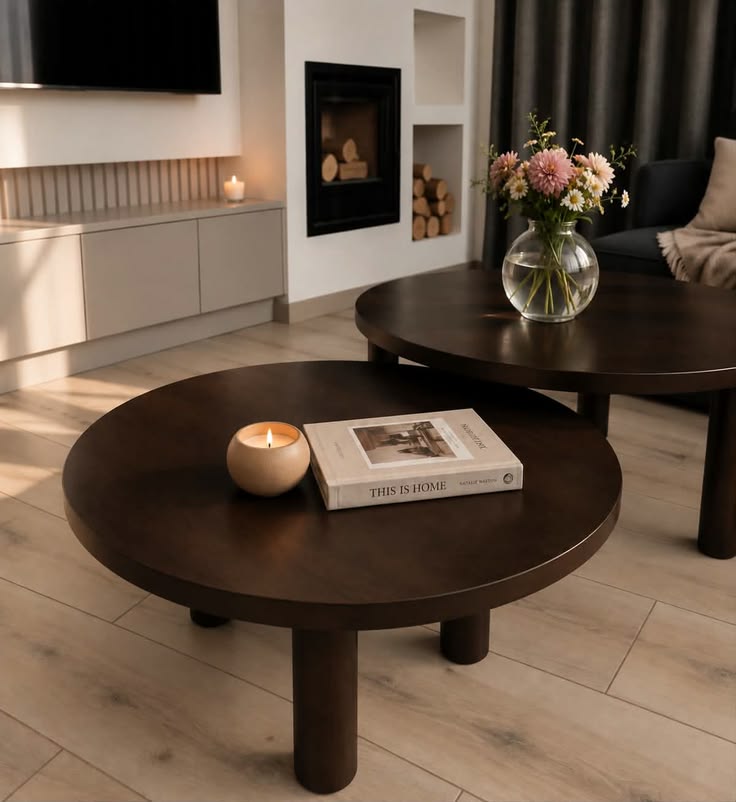
More often than not, our starting point is something that naturally draws the eye. For us, that is often flowers. They bring softness and movement, particularly against the darker wood and black finishes in our living rooms, but it could just as easily be something you already love having in the room.
Instead of wondering how to fill an empty surface, ask whether that first piece needs anything around it at all. Sometimes it does. Sometimes it already feels complete. And it doesn’t always have to be something chosen purely for decoration. A favourite object, something brought back from a trip, or a small piece that means something to you can make the table feel much more personal.
Bring the Arrangement Together
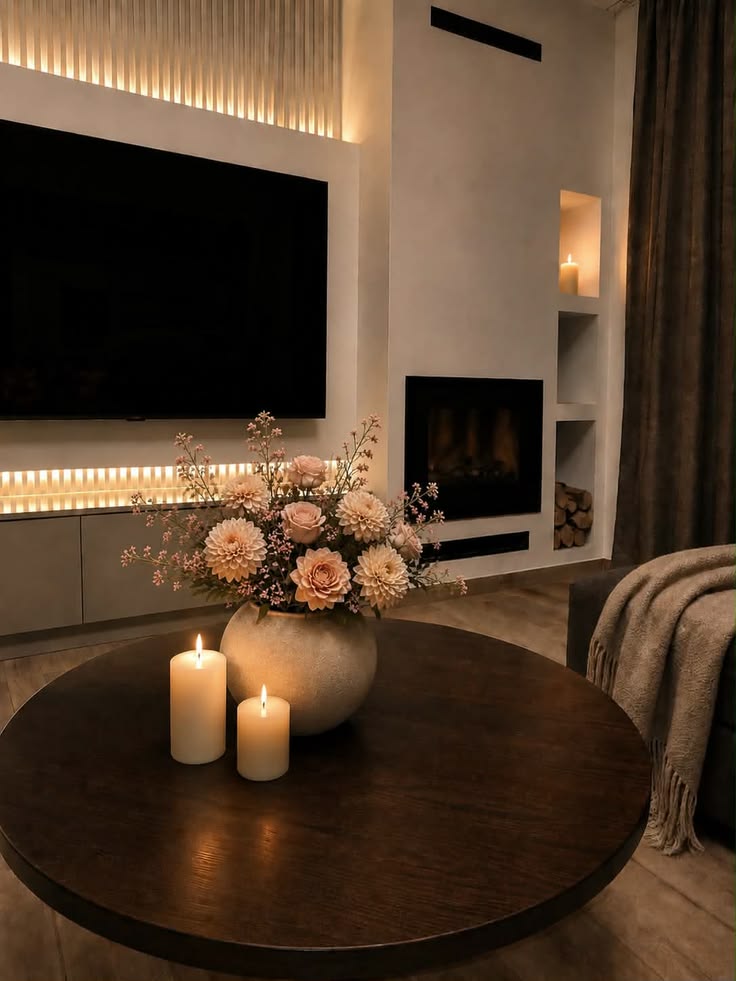
We noticed that our arrangements worked better once we stopped keeping everything at roughly the same level. A coffee-table book creates a low layer and can lift a smaller object slightly. Candles introduce height, while a taller piece can add movement. A tray can bring some structure when several pieces are used together and keeps smaller objects from feeling scattered across the table. The same idea works even without a tray. Keeping a few related pieces close together helps them feel like part of one arrangement rather than separate objects competing for attention.
The shapes matter too. Rounded forms soften straighter lines, while something more structured can balance a softer arrangement. Material can make a difference as well. On our dark wood tables, lighter flowers and softer finishes create contrast, while the black table can take warmer or more textured pieces without losing its clean look.
If your own table feels a little flat, changing the height, material or placement of just one piece can sometimes be enough. In our case, this is usually where something gets moved a few centimeters, we stand back to look at it, and then move it again.
Let the Coffee Table Belong to the Room
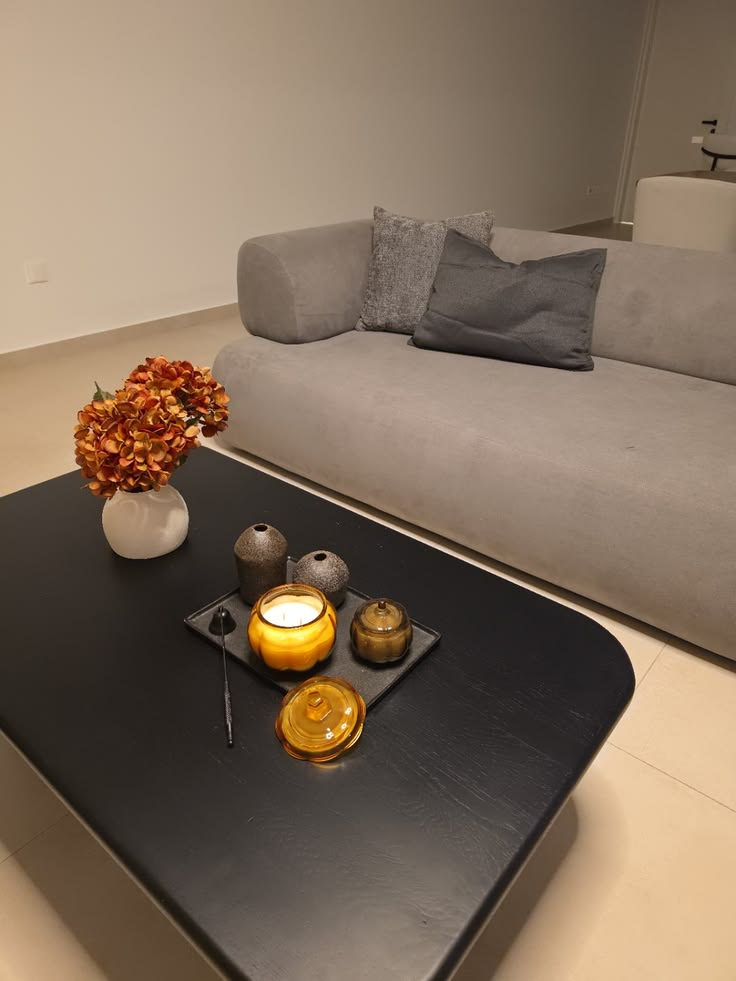
In both living rooms, we ended up repeating some of the colours and materials already around the table rather than introducing something completely different. The black details on one table connect back to darker elements in the room, while the wood tones in the other bring extra warmth.
You can use the same idea by picking up one or two colours or materials already in your room. Nothing needs to match exactly — and actually, we prefer when it doesn’t. Those little connections help the table feel like it belongs in the room rather than sitting separately from it.
Why We Chose Different Coffee Tables
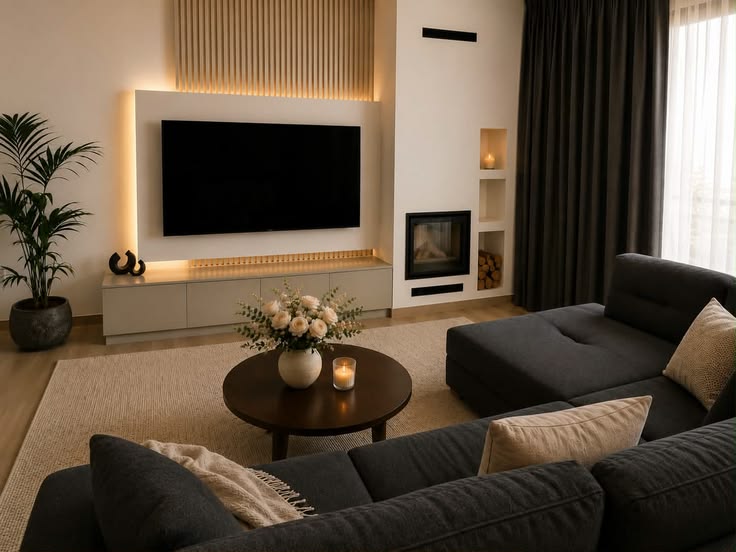
The clearest example of this is probably our own two living rooms. Although they share many of the same colours and a similar calm feel, the coffee tables ended up being completely different — and we love that they give the two spaces such different personalities.
In one living room, two round dark-wood tables sit at the centre of the seating area. There are already plenty of straight architectural lines — from the TV wall and cabinetry to the fireplace and sectional — so the curves bring something softer into the middle of the space.
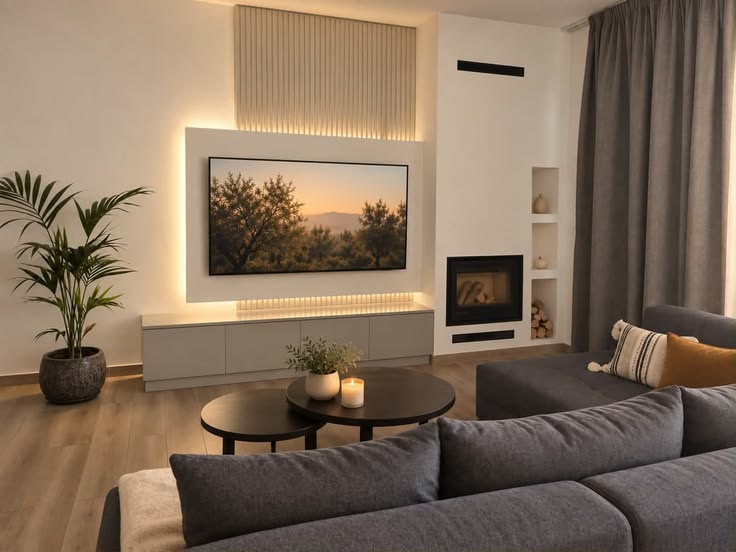
The overlapping tables create a relaxed, layered look. Rather than one solid piece occupying the centre, the two shapes add movement and keep the area feeling more open.
Their dark wood brings warmth and depth against the grey upholstery and lighter finishes, while connecting with warmer tones elsewhere in the room.
The other living room called for something quite different. Here, the sectional is substantial and the seating area is long and open, so a smaller table could easily have felt lost.
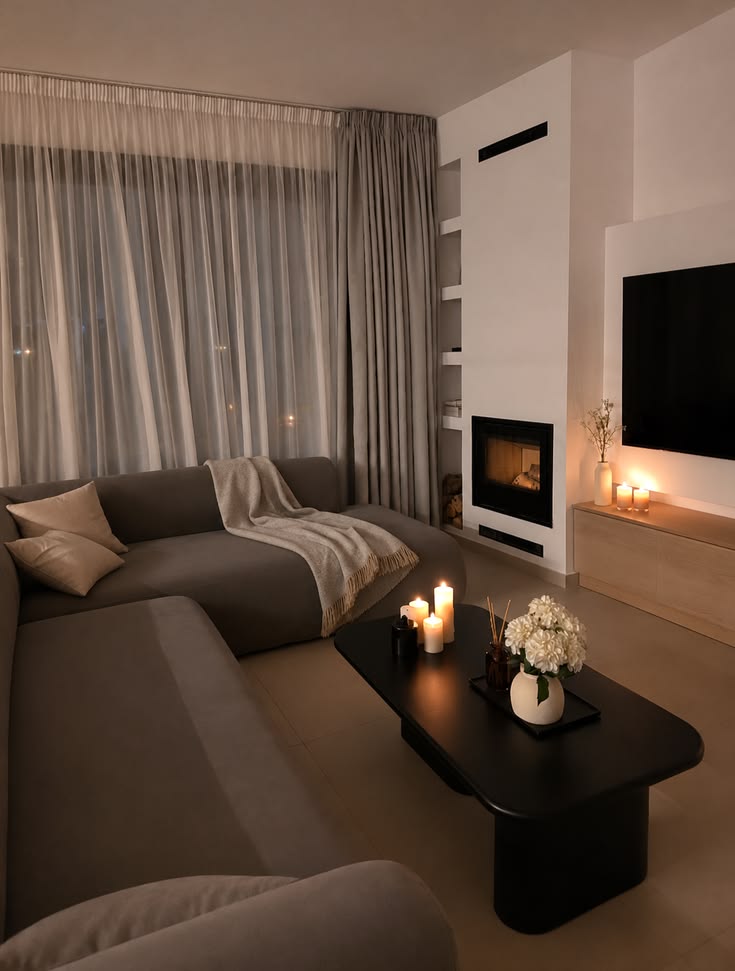
We chose one larger black coffee table to give the space a stronger centre and help anchor the furniture around it. Its dark finish connects with the fireplace, television and other black details, while creating contrast against the soft greys, white and light wood. The softer edges keep it from feeling too dominant, so it has presence without taking over the room.
What we find interesting is that the tables are doing much more than simply holding whatever we place on top of them. One brings softness, warmth and movement. The other adds structure, contrast and presence.
Finding What Works for Your Room
Looking at our two living rooms now, the coffee tables could hardly be more different, yet each one works for the room it belongs to. And perhaps that is the most useful thing we’ve learnt from styling them: there doesn’t need to be one formula. The room, the table and the pieces you love will usually tell you where to begin.
xo, M & E